What This Page Covers
Complete step-by-step instructions for self-injecting your GLP-1 medication, including preparation, technique, and safety considerations.
One-Minute Summary
Your GLP-1 medication is injected once weekly under the skin (subcutaneous). Clean the injection site, pinch the skin, insert the needle at a 90-degree angle, inject slowly, and dispose of the needle safely. Rotate injection sites each week.
Before You Begin
Gather Your Supplies
- Your pre-filled medication syringe
- Alcohol swab or clean cotton wool with rubbing alcohol
- Sharps disposal container
- Clean, flat surface to work on
Check Your Medication
- Verify the expiration date
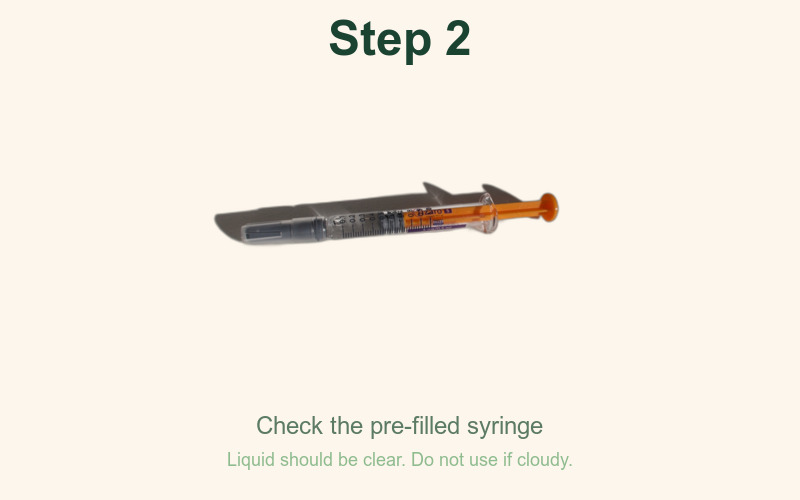
- Inspect the solution — it should be clear and colourless
- Do not use if cloudy, discoloured, or contains particles
- Allow refrigerated medication to reach room temperature for 15-30 minutes before injecting
Choosing an Injection Site
Recommended Sites
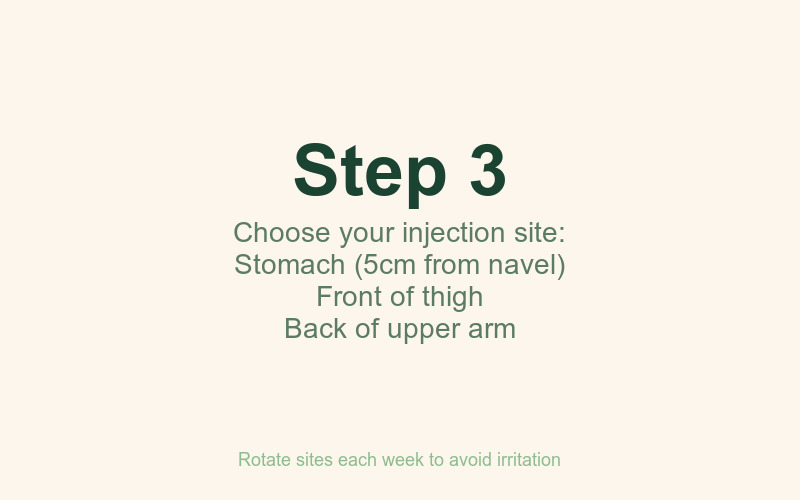
- Abdomen: At least 5cm (2 inches) from the belly button, avoiding the waistline
- Thigh: Front or outer area of the upper thigh
- Upper arm: Back of the upper arm (may need assistance)
Site Rotation
- Use a different site each week
- Keep a record of where you last injected
- Do not inject into the same exact spot repeatedly
- Avoid areas with scars, bruises, or skin irritation
Step-by-Step Injection Instructions
Step 1: Wash Your Hands
Wash hands thoroughly with soap and water. Dry completely.
Step 2: Prepare the Injection Site
- Choose your site
- Clean the area with an alcohol swab
- Allow the skin to air dry completely (do not blow on it)
Step 3: Prepare the Medication
- Check the label, expiry date, and liquid appearance before use
- If using a pre-filled syringe, remove the needle cap carefully
- Do not touch the needle
Step 4: Pinch the Skin
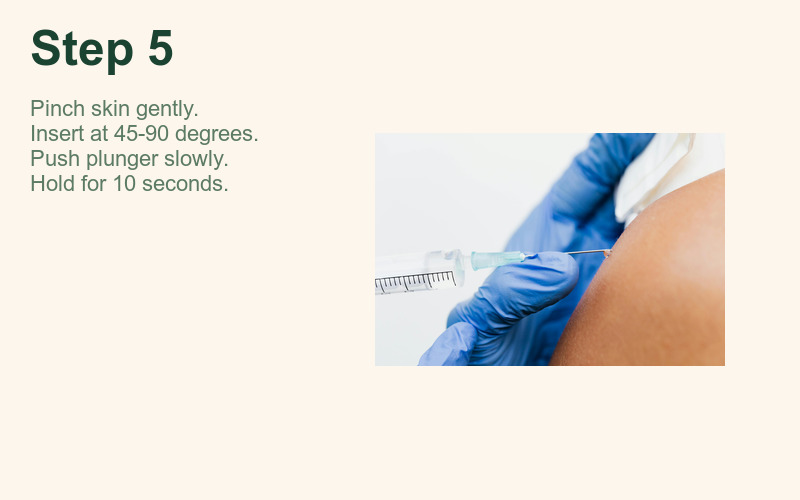
- Gently pinch a fold of skin at the injection site between your thumb and forefinger
- Hold the pinch throughout the injection
Step 5: Insert the Needle
- Hold the syringe like a pencil at a 90-degree angle to the skin
- Insert the needle quickly and smoothly into the pinched skin
- Push it in fully
Step 6: Inject the Medication
- Press the injection button or plunger slowly and steadily
- Hold for 10 seconds after the medication is fully injected
- This ensures the full dose is delivered
Step 7: Remove the Needle
- Pull the needle straight out at the same angle it went in
- Release the skin pinch
- Do not rub the injection site
- If there is a small drop of blood, apply gentle pressure with a clean cotton ball
Step 8: Dispose Safely
- Place the used needle immediately in a sharps container
- Never recap needles
- Never dispose of needles in regular waste
- When the sharps container is full, follow local disposal guidelines
Tips for a More Comfortable Injection
- Allow medication to reach room temperature before injecting
- Use a quick, confident motion when inserting the needle
- Inject slowly — rushing can cause discomfort
- Relax the muscle at the injection site
- Alternate sides (left and right) when using the same body area
- The needle is very thin — most people find the injection nearly painless
Common Concerns
"I'm nervous about injecting myself"
This is very common. Most people find that after the first 2-3 injections, the anxiety decreases significantly. The needle is thin and the injection is quick.
"I saw a drop of blood"
A small amount of bleeding at the injection site is normal and not a cause for concern. Apply gentle pressure with a clean cotton ball.
"I'm not sure if the full dose was delivered"
If you are unsure whether the full dose was delivered, do not inject a second dose. Contact the care team or your own healthcare provider for guidance.
"I feel a lump at the injection site"
Small lumps can occur, especially if medication is injected too quickly or if the same site is used repeatedly. They usually resolve on their own. Rotating sites helps prevent this.
Injection Schedule
- Inject on the same day each week
- You can inject at any time of day
- You do not need to inject at the same time each week
- Set a weekly reminder to help maintain consistency
When to Contact Your Healthcare Provider
- Signs of infection at the injection site (increasing redness, warmth, swelling, pus)
- Allergic reaction (rash, itching, swelling, difficulty breathing)
- Difficulty with the injection device
- Uncertainty about whether the full dose was delivered
Medical Notice
This information is educational and does not replace medical advice. If you have questions about injection technique, consult your care team.