
The science
Your gut already makes the signal. Tirzepatide makes it last.
Every time you eat, your intestine releases two hormones that tell your brain and pancreas food has arrived. Tirzepatide is built from those signals, and tuned to keep working all week.
01 · The signals
Two gut hormones that say "you've eaten".
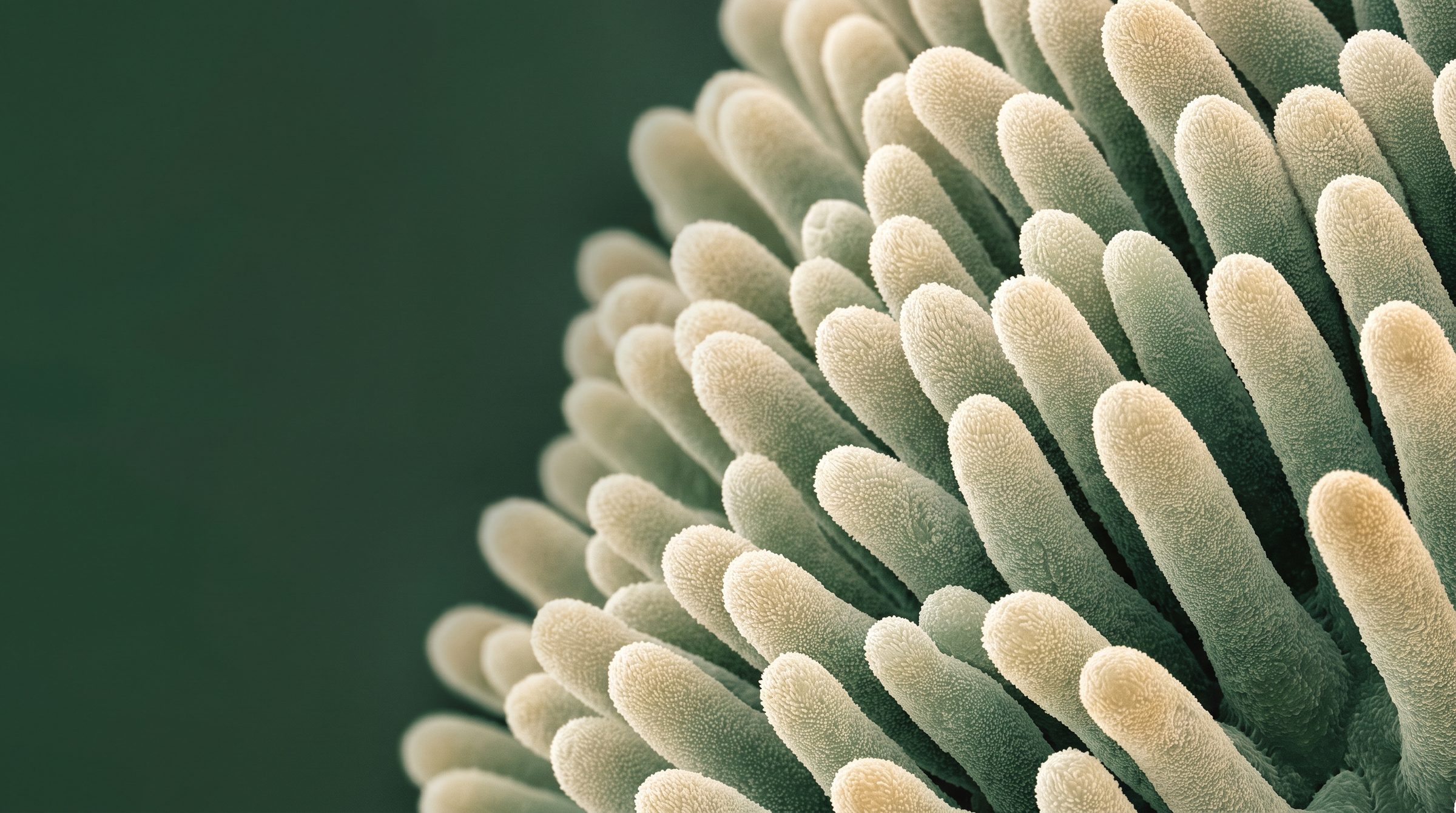
Your small intestine is lined with specialised cells that sense food. When a meal arrives, K-cells release GIP and L-cells release GLP-1. Together they are called incretins.
They tell your pancreas to release insulin, your stomach to slow down and your brain that you're getting full.
But your body clears them fast. Natural GLP-1 is broken down within about 2 minutes by an enzyme called DPP-4. The signal is real, but brief.
How long each signal lasts. Bars not to scale; the real gap is over 3,000 times.
02 · The molecule
One molecule. Two keys.
Tirzepatide is a chain of 39 amino acids, built on the backbone of your own GIP and tuned so it also fits the GLP-1 receptor.
It leans towards GIP. It acts on the GIP receptor about as strongly as your own GIP, and on the GLP-1 receptor a little less strongly than your own GLP-1. Researchers call this "imbalanced" dual agonism.
A small fatty-acid tail lets it ride on albumin, the most common protein in your blood. That shields it from being broken down and filtered out, which is why one injection lasts a week.
03 · In your brain
Hunger gets quieter.
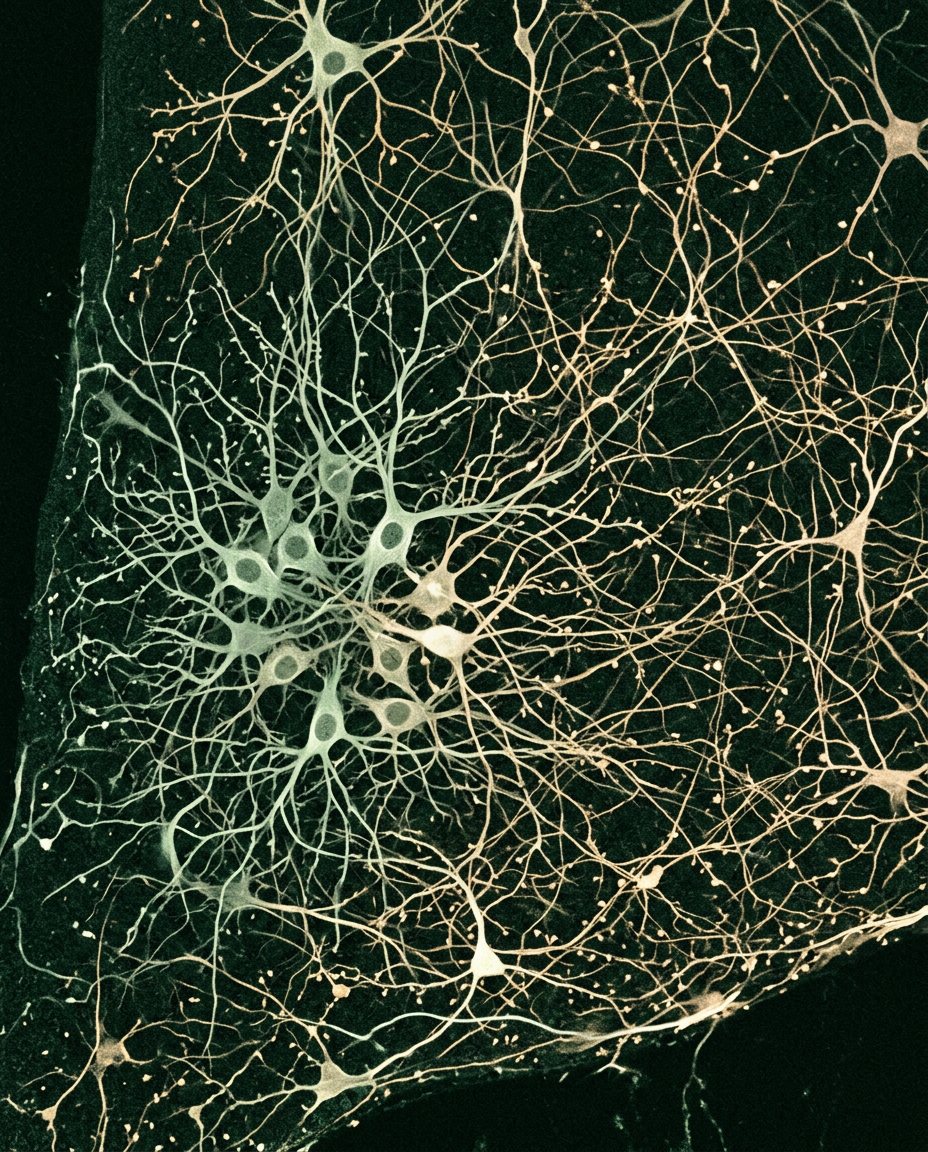
GLP-1 and GIP receptors sit in the parts of your brain that control appetite: the hypothalamus and the hindbrain. Tirzepatide reaches them and turns down the drive to eat.
People often describe it as less "food noise". You feel full sooner and stay full longer, so smaller portions feel normal rather than a battle.
It also slows how fast your stomach empties, especially in the first weeks. Early research suggests the GIP part may help the brain tolerate the GLP-1 effect, which is one idea behind using both.
04 · In your pancreas
Insulin, only when you need it.
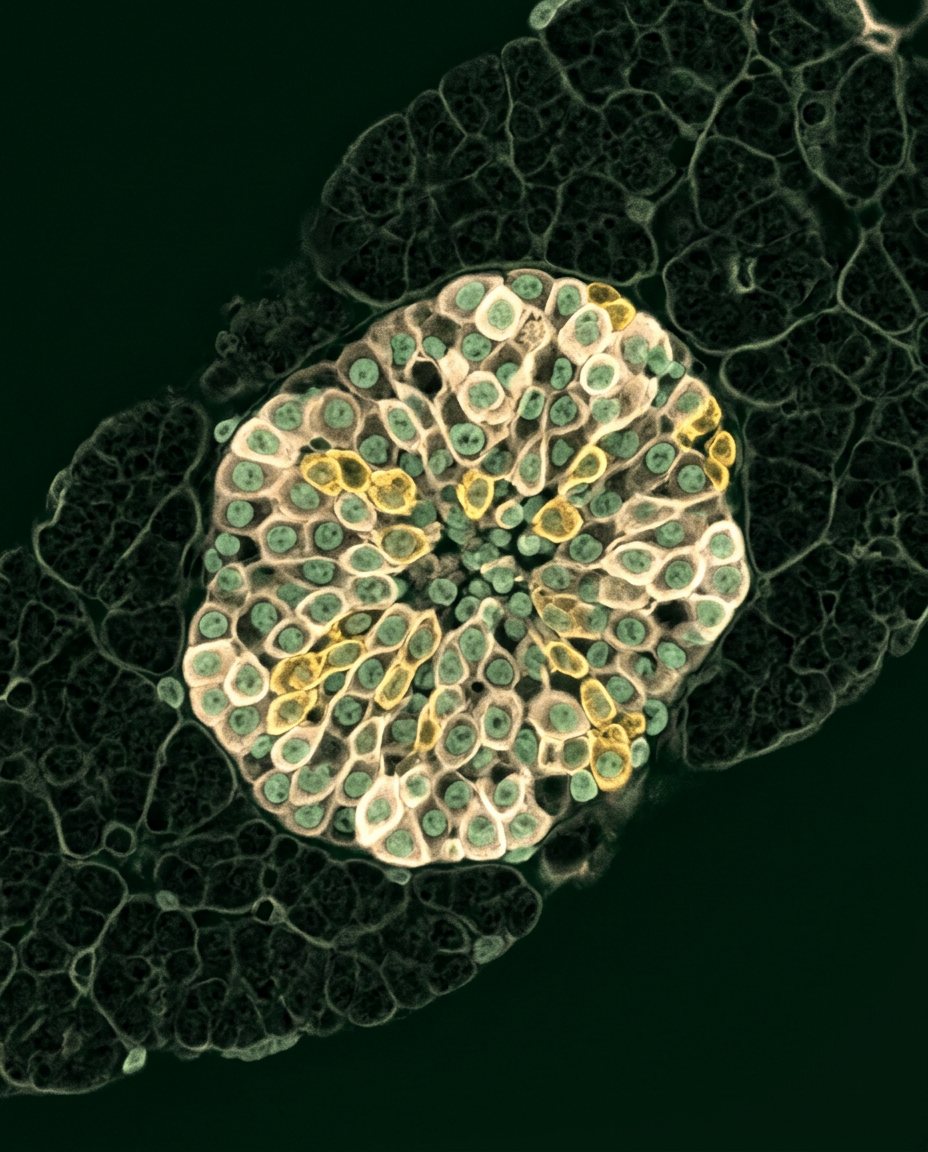
In clusters of cells called islets, both hormones help release insulin. The key word is glucose-dependent: the push only happens when your blood sugar is rising, after a meal.
GLP-1 also lowers glucagon, the hormone that tells your liver to release more sugar.
The result is steadier blood sugar, with fewer spikes and crashes. That is why the same treatment is also used for type 2 diabetes.
05 · In your fat tissue
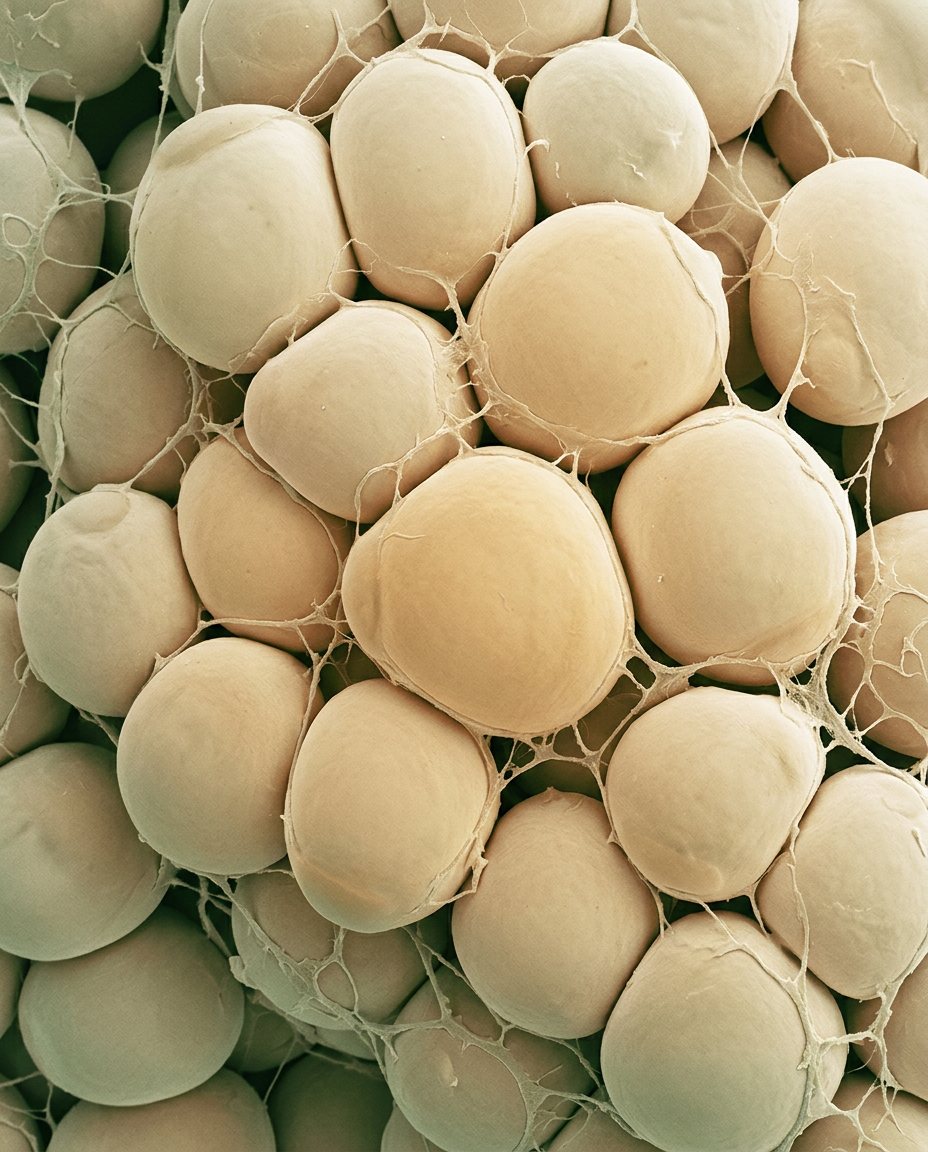
Most of what you lose is fat.
In a body-scan study inside the main trial, people on tirzepatide lost 34% of their fat mass over 72 weeks, against 11% of their lean mass.
That works out to roughly three quarters fat, one quarter lean, the same split seen with weight loss from diet alone. Eating enough protein and doing some strength work helps you keep muscle.
What the weight lost was made of. SURMOUNT-1 body-composition substudy, 160 people.
06 · The evidence
Tested in thousands of people, over 72 weeks.
The SURMOUNT trials were large, randomised and published in leading journals. These are the three that matter most for weight loss.
Trial figures are averages. Everyone responds differently, so your results may be higher or lower.
07 · Why the dose climbs
Start low. Let your body catch up.
Your gut and brain need time to adjust to a signal this strong. Starting at 2.5 mg and stepping up every 4 weeks lets that happen gently.
SURMOUNT-1 also showed a clear dose response: 5 mg, 10 mg and 15 mg each did more than the dose below. Stepping up is how most people reach the doses that did best in the trials.
You don't have to climb every month. Many people pause on a dose that's working.
The fastest possible climb. Most people move more slowly.
References
- Jastreboff AM, et al. Tirzepatide once weekly for the treatment of obesity (SURMOUNT-1). N Engl J Med. 2022;387:205-216.
- Aronne LJ, et al. Tirzepatide as compared with semaglutide for the treatment of obesity (SURMOUNT-5). N Engl J Med. 2025.
- Aronne LJ, et al. Continued treatment with tirzepatide for maintenance of weight reduction in adults with obesity (SURMOUNT-4). JAMA. 2024;331(1):38-48.
- Look M, et al. Body composition changes during weight reduction with tirzepatide in the SURMOUNT-1 study. Diabetes Obes Metab. 2025.
- Coskun T, et al. LY3298176, a novel dual GIP and GLP-1 receptor agonist for the treatment of type 2 diabetes mellitus. Mol Metab. 2018;18:3-14.
- Willard FS, et al. Tirzepatide is an imbalanced and biased dual GIP and GLP-1 receptor agonist. JCI Insight. 2020;5(17):e140532.
- Holst JJ. The physiology of glucagon-like peptide 1. Physiol Rev. 2007;87(4):1409-1439.
Want to know if it's right for you?
Check if you qualify →